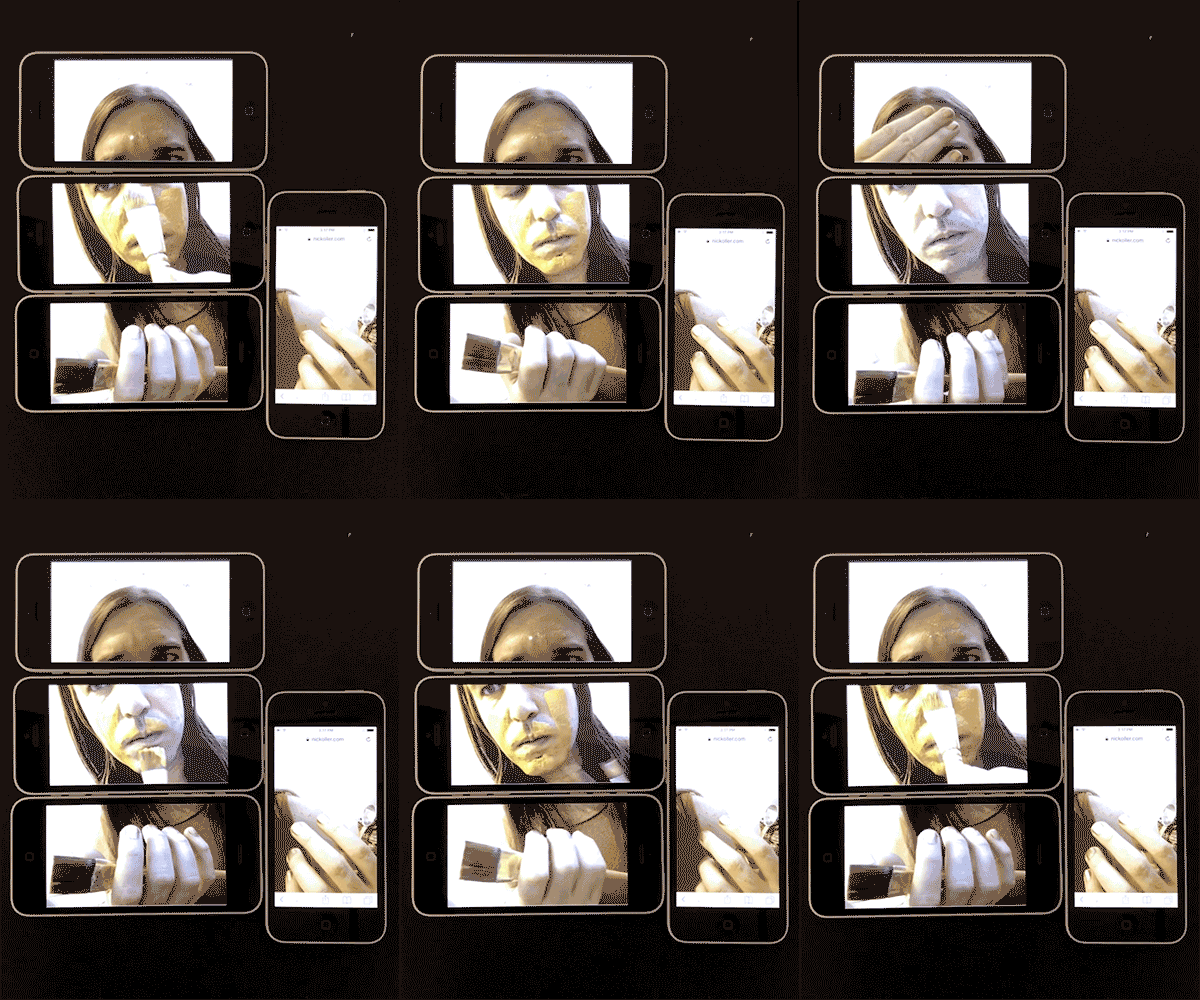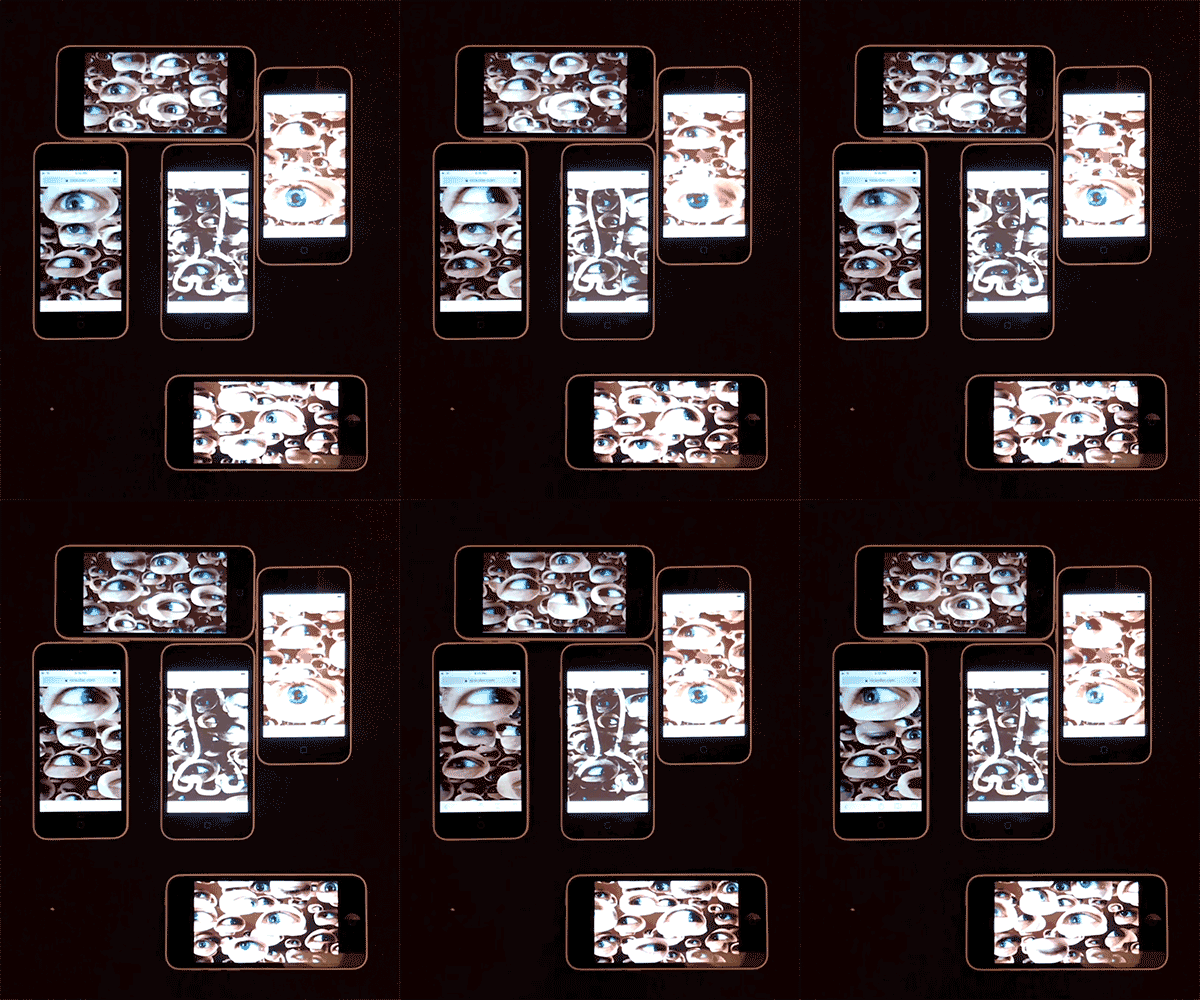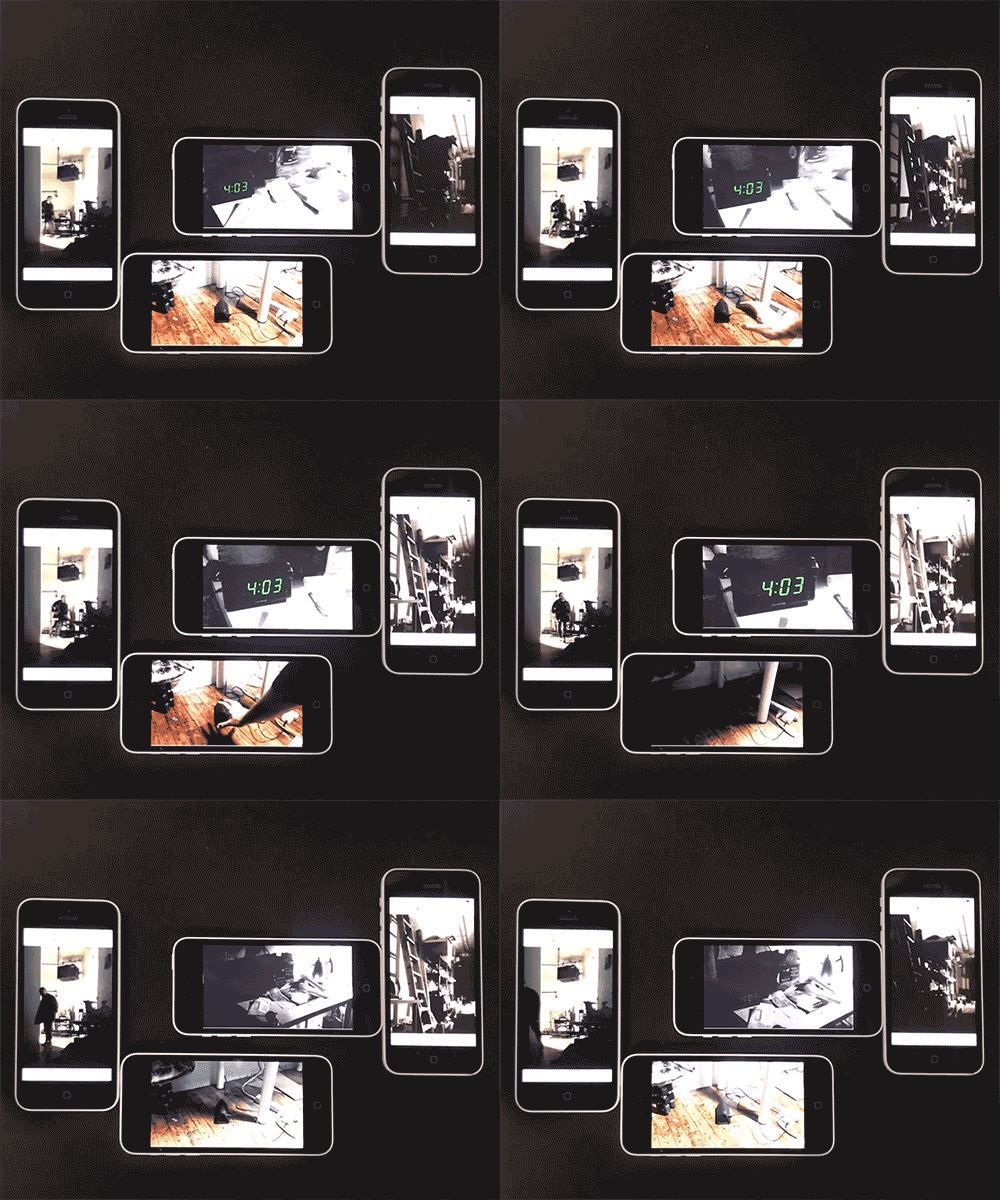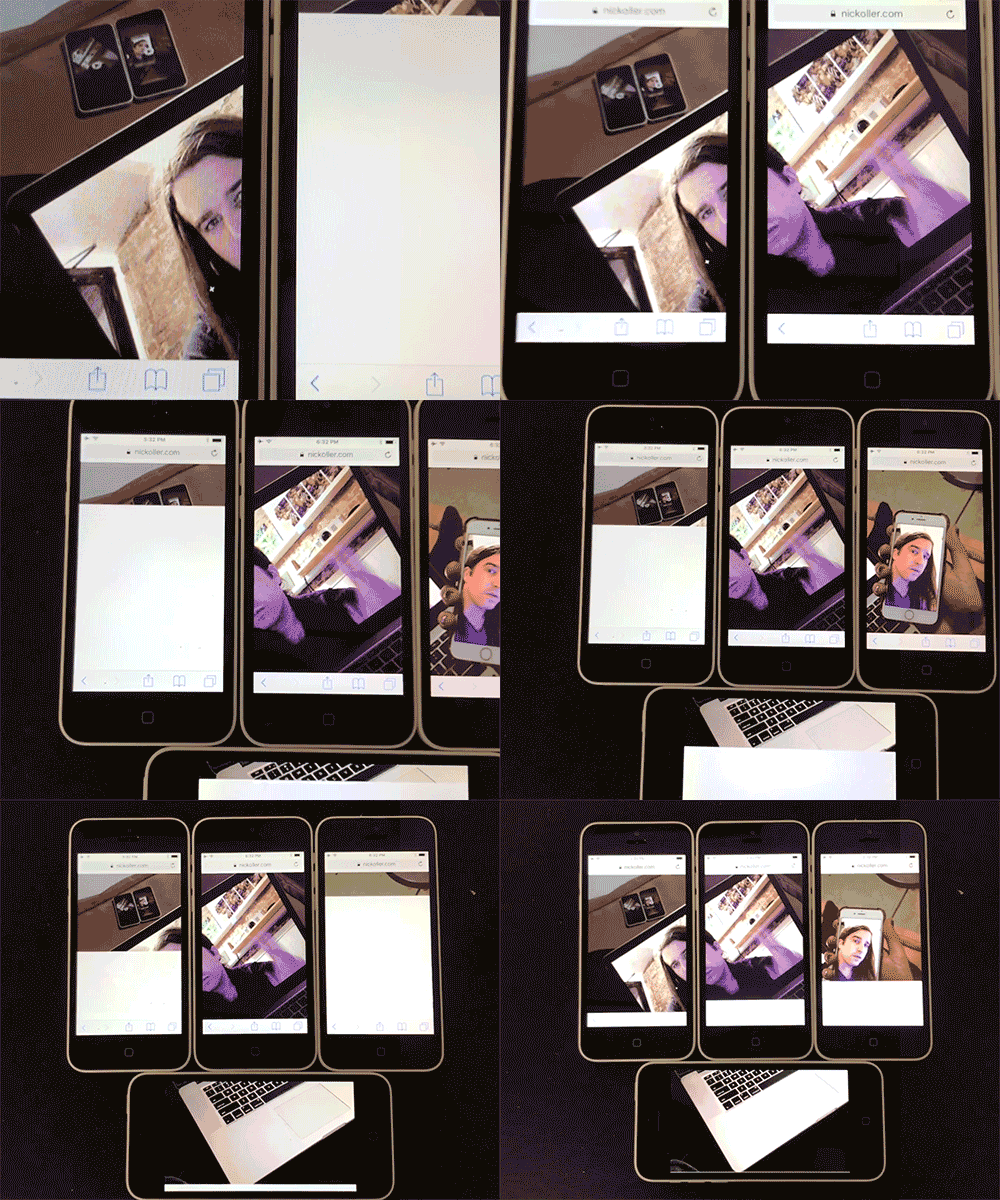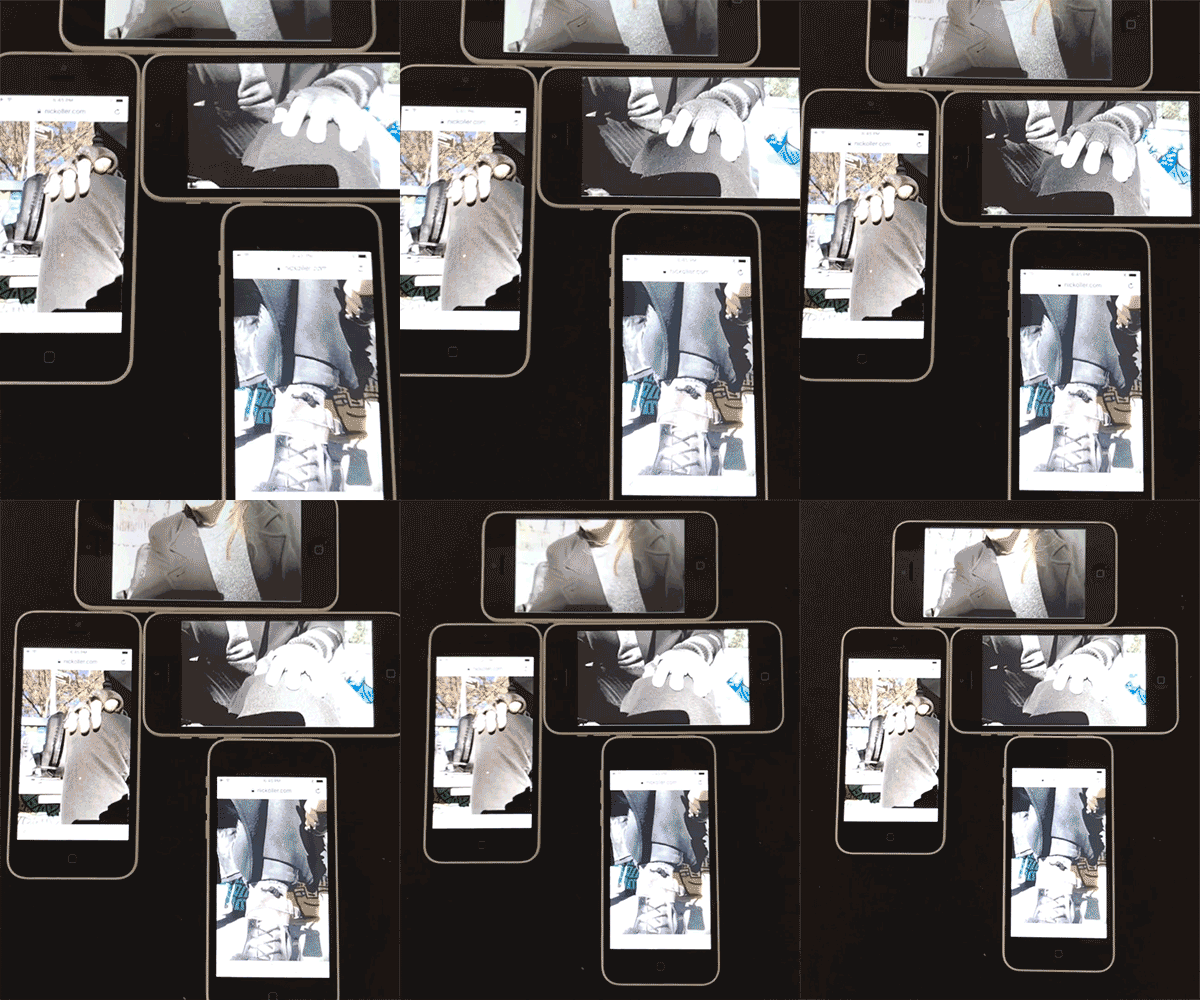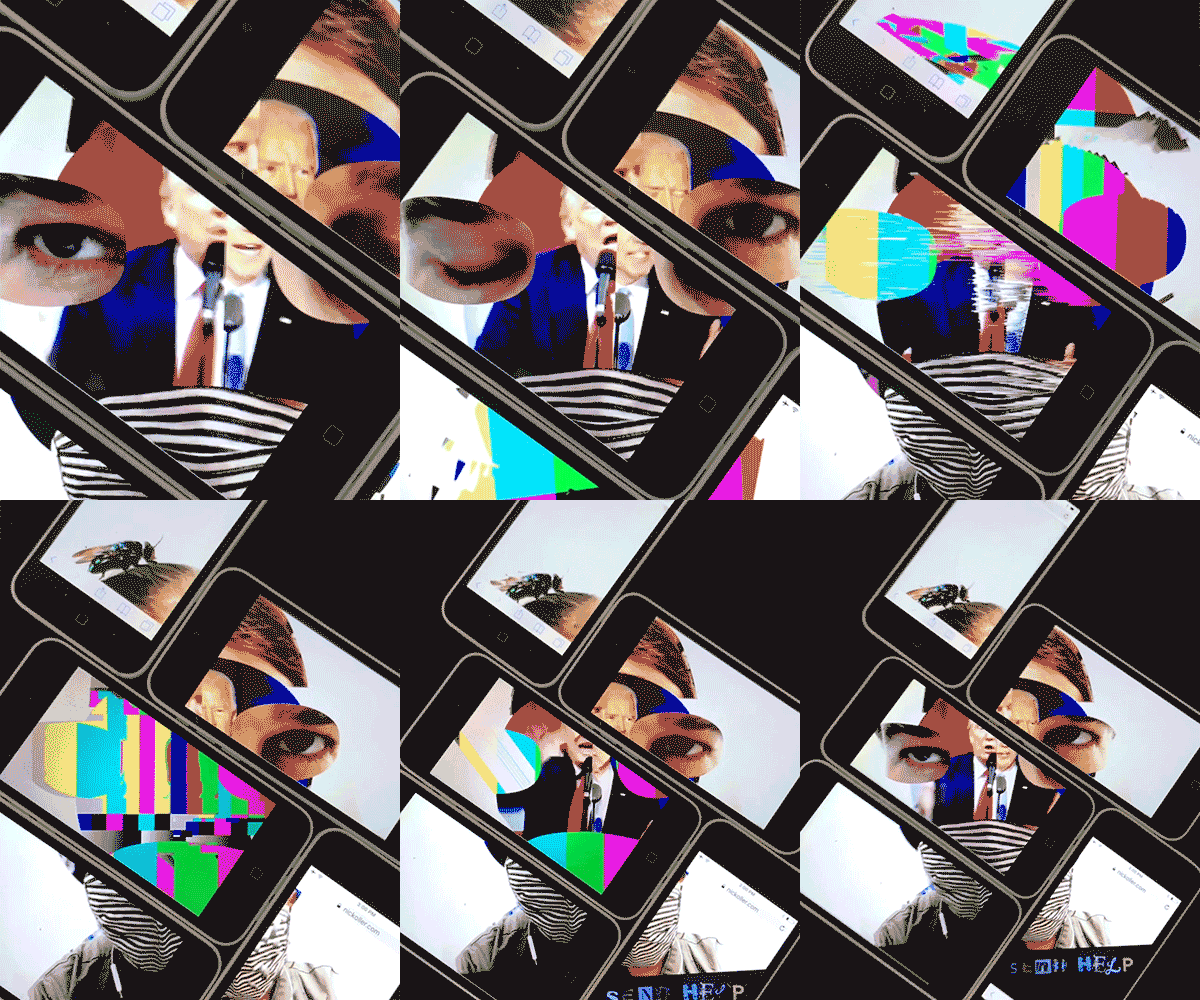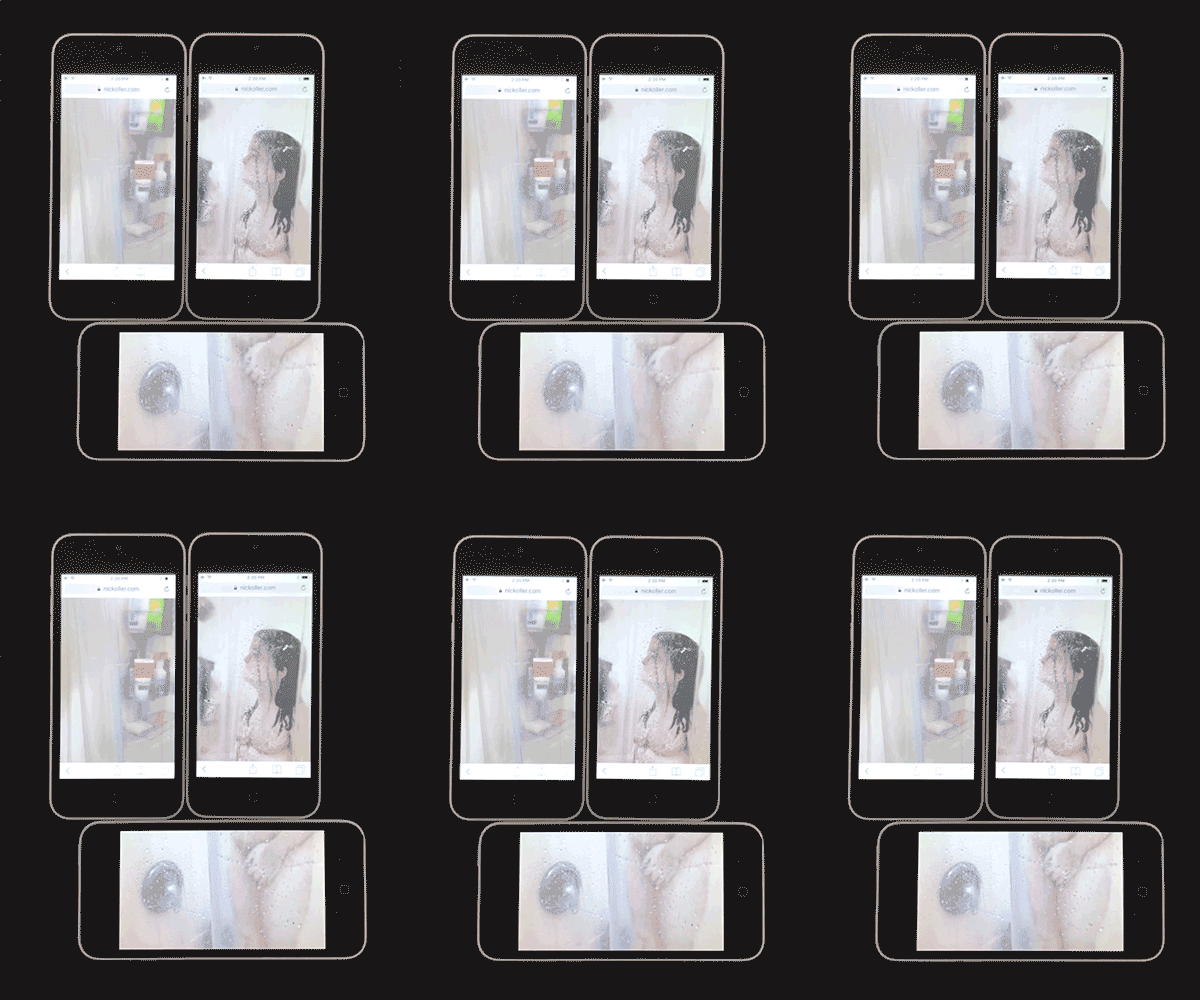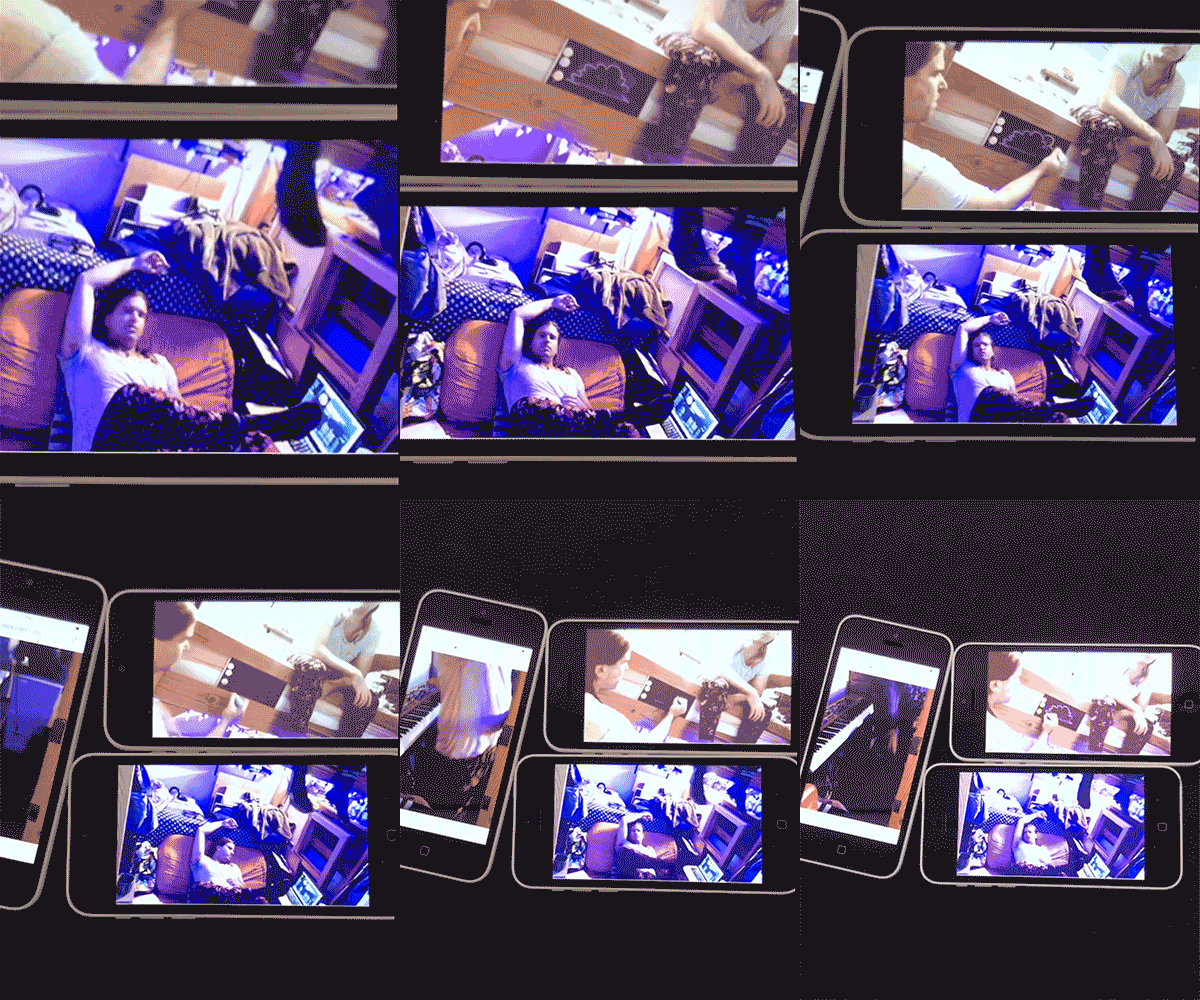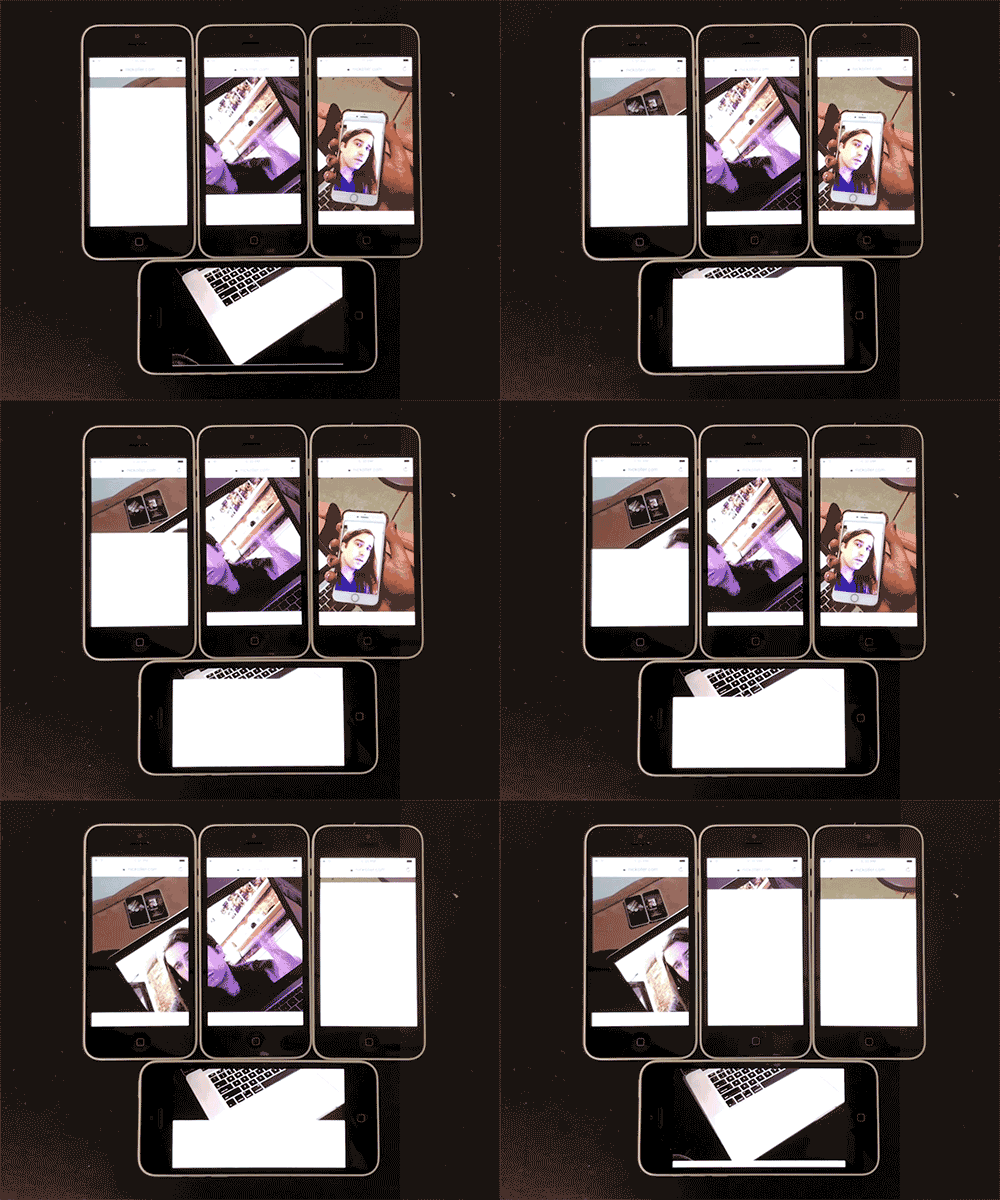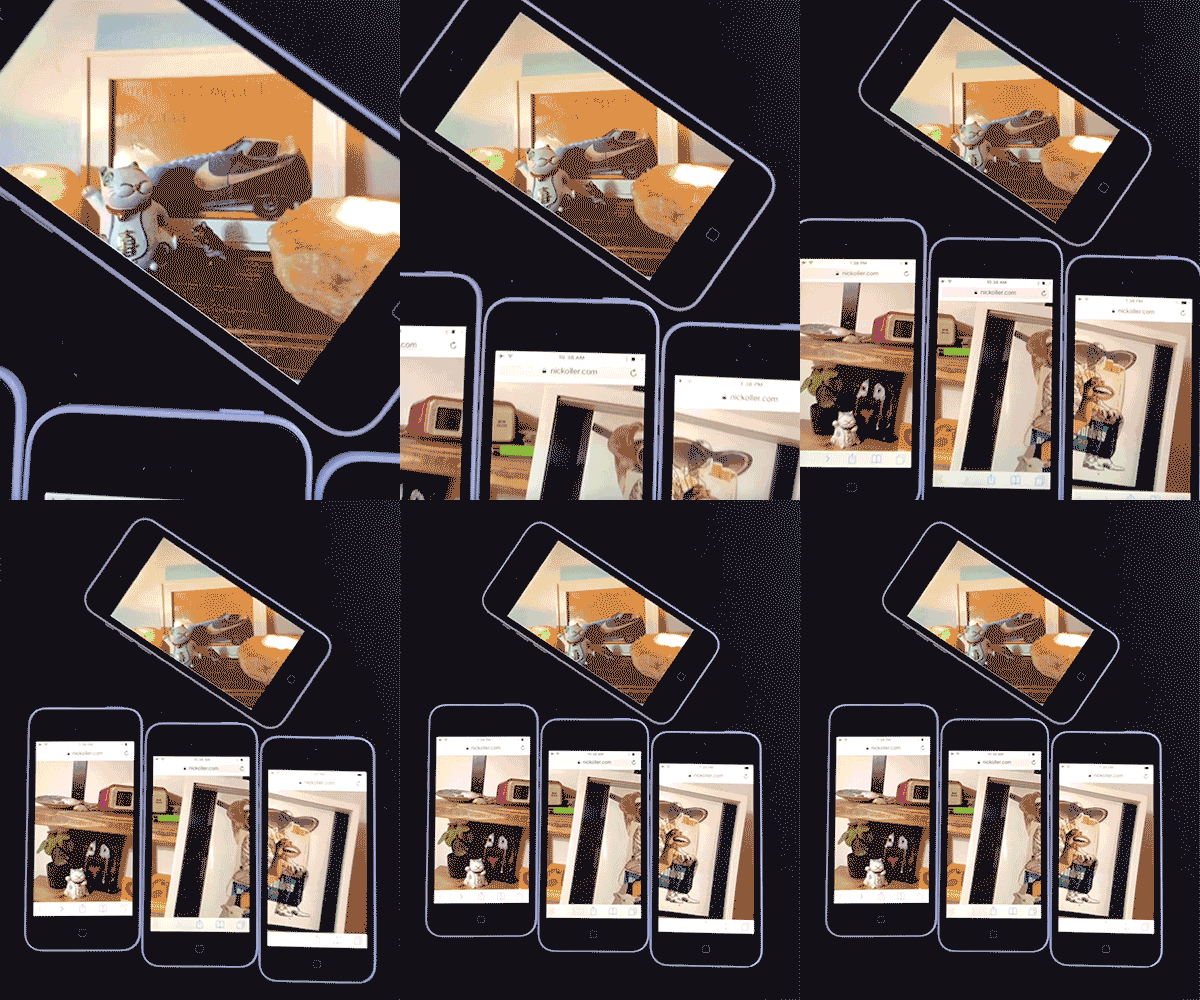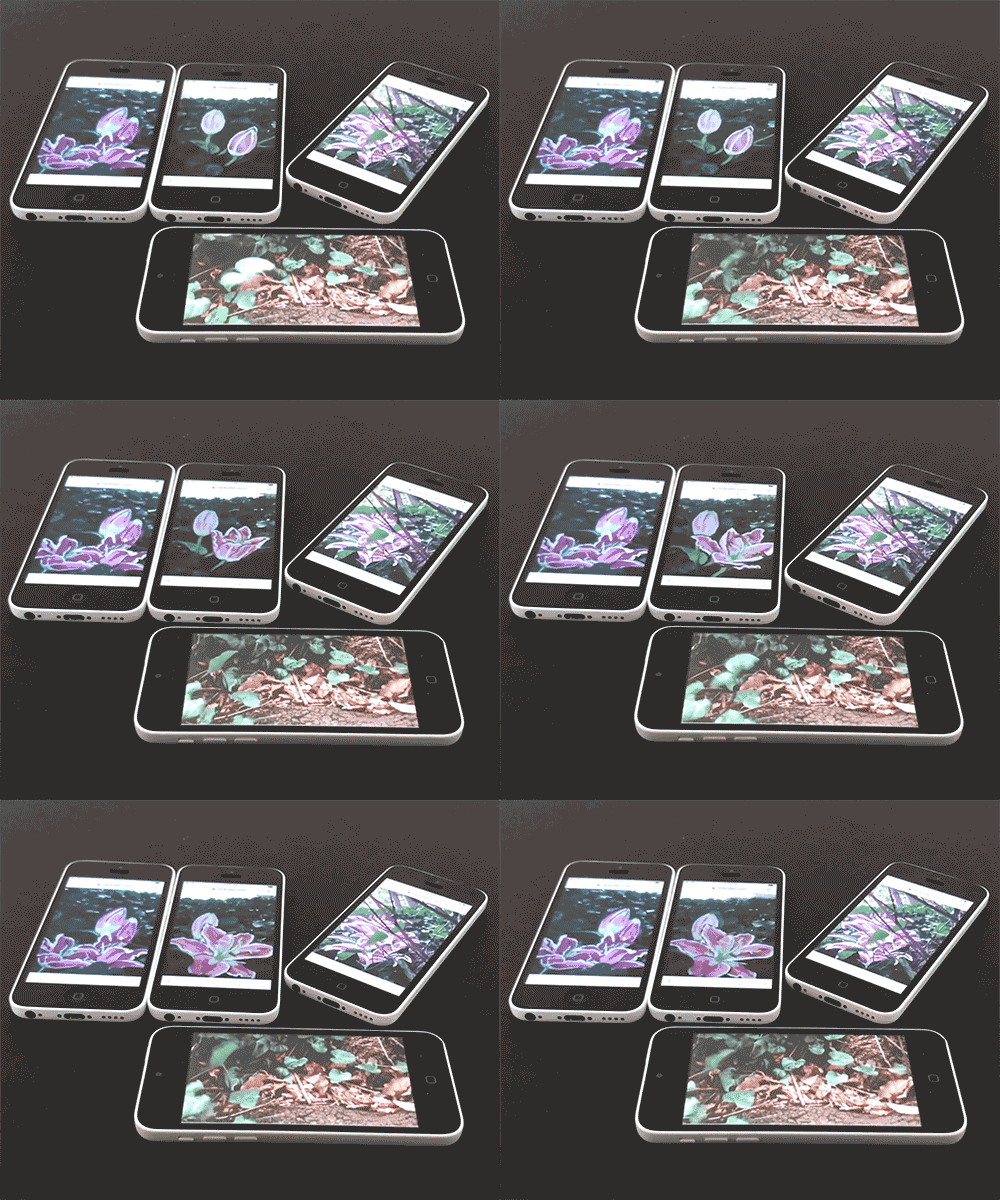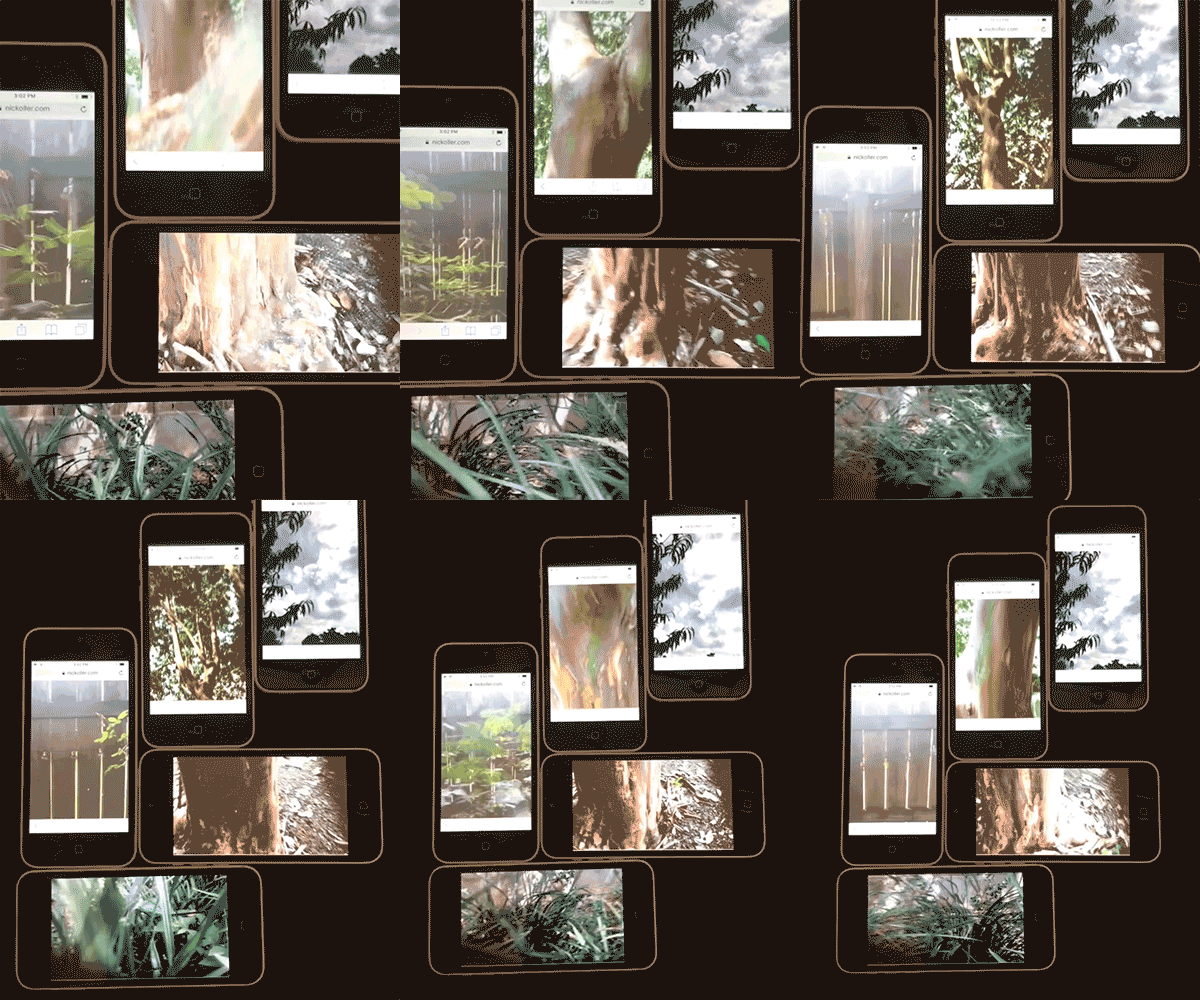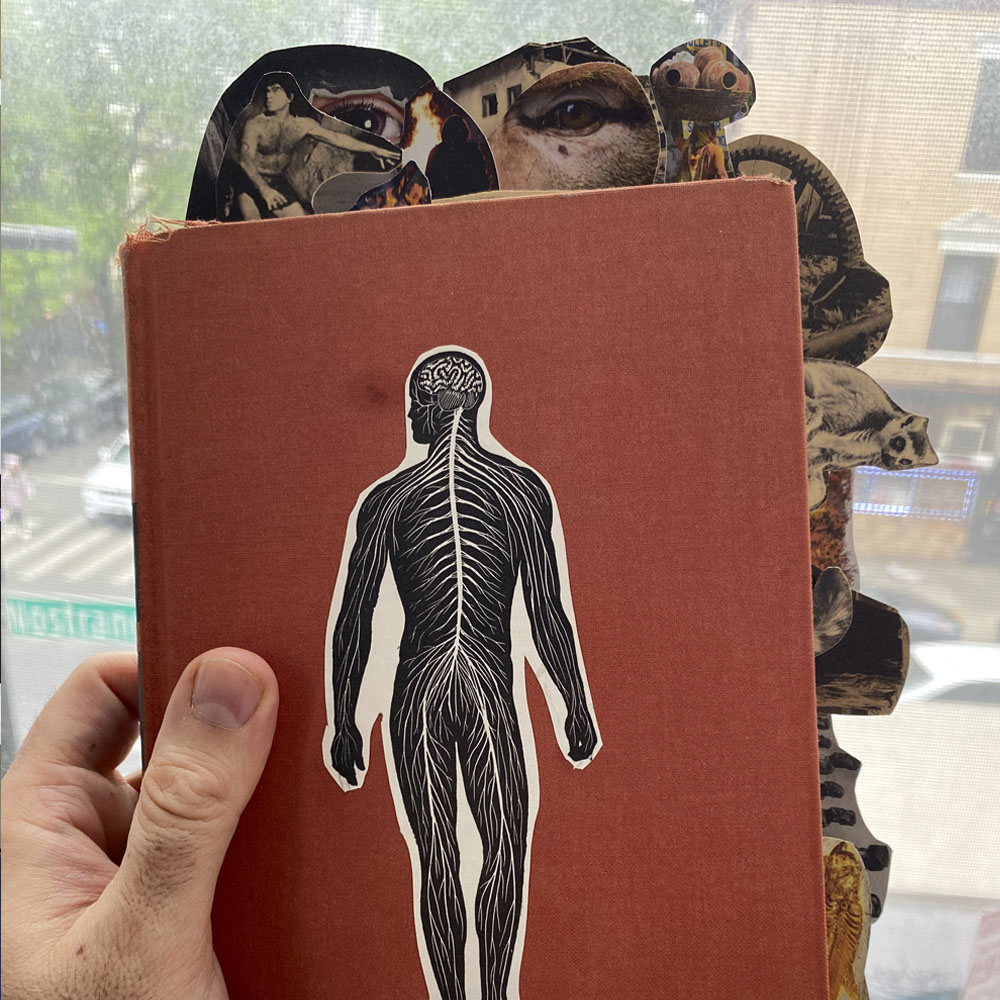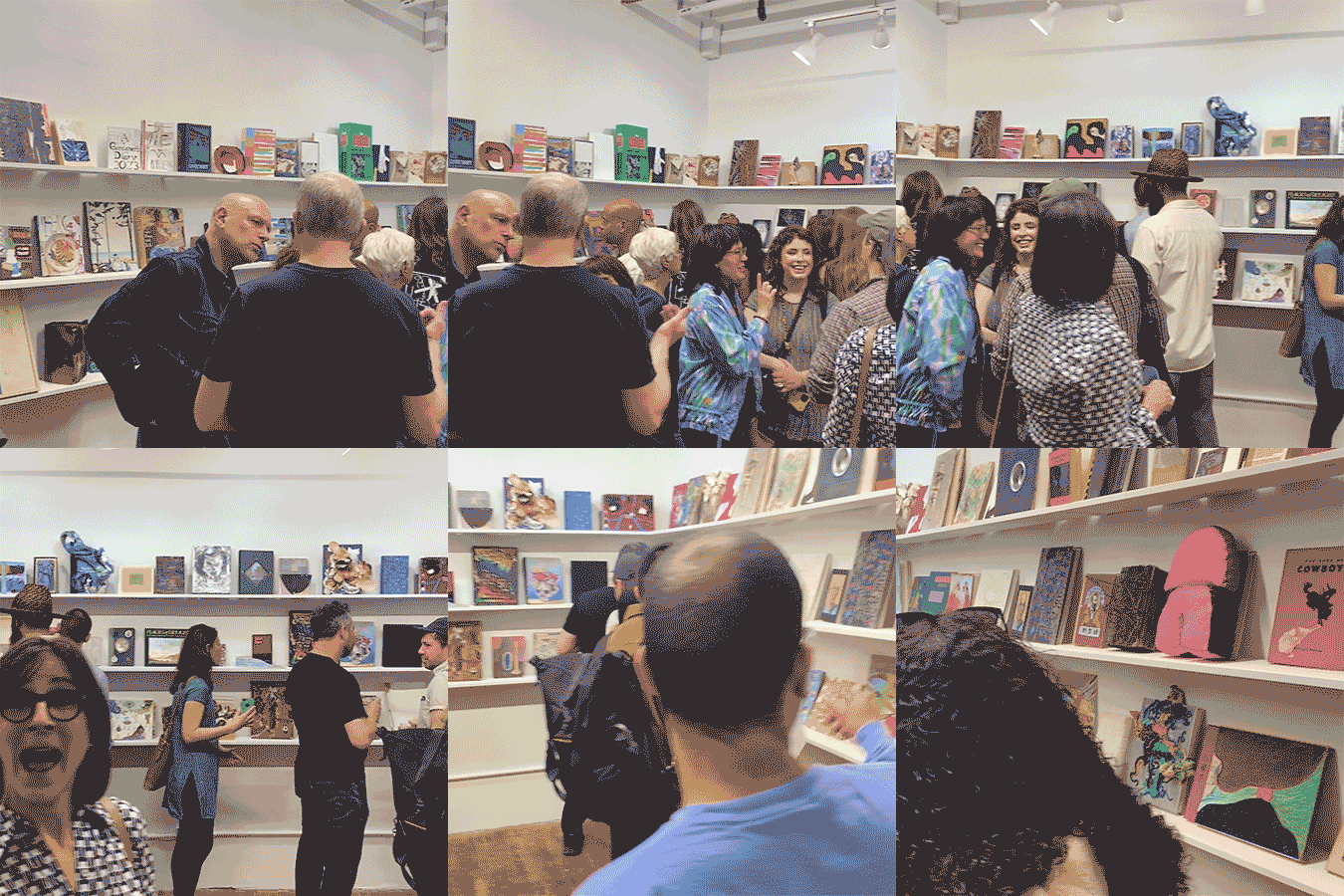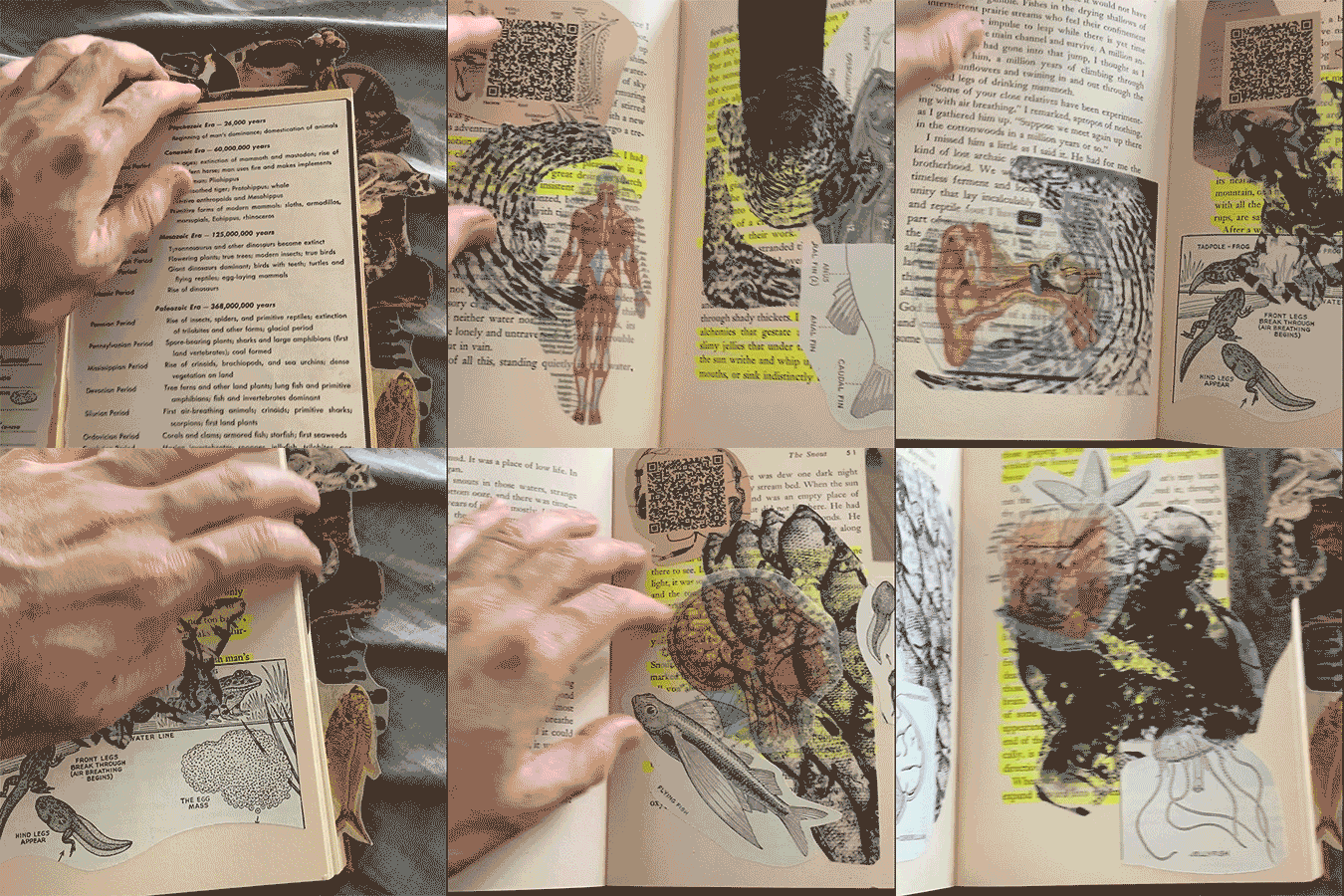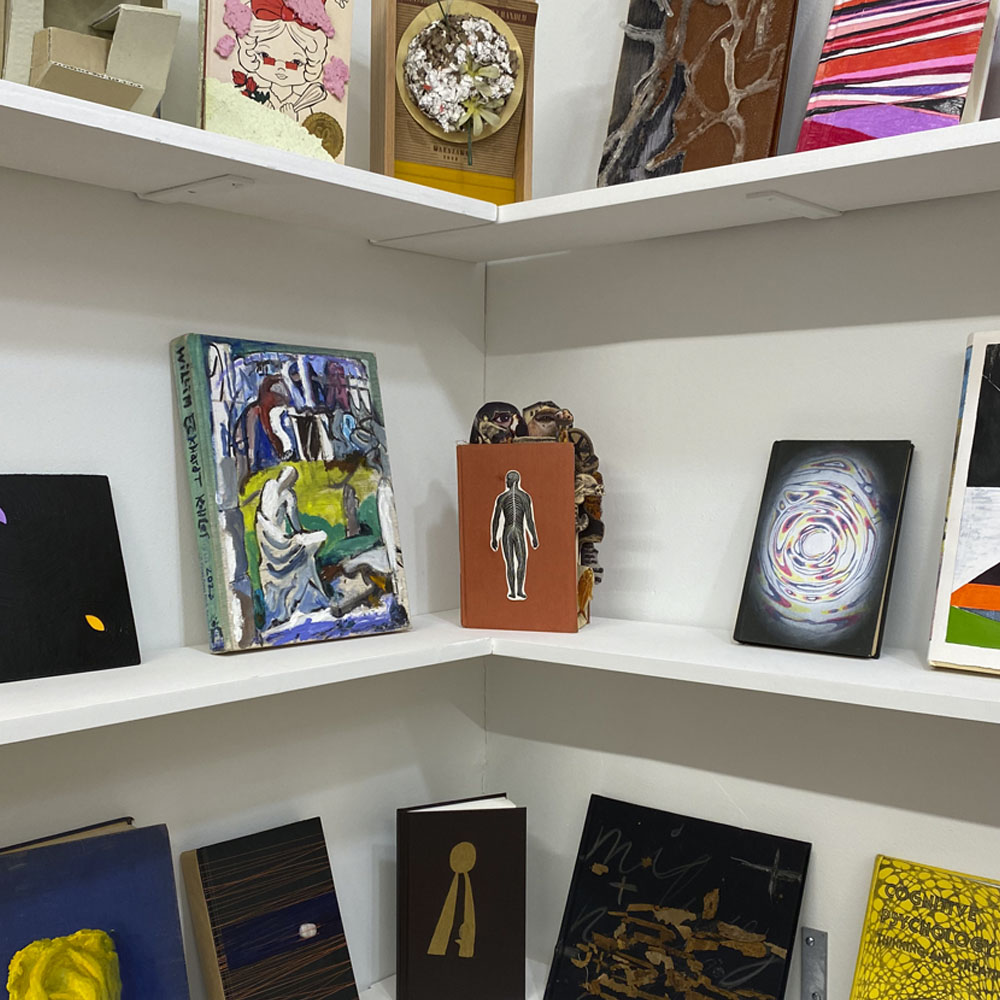





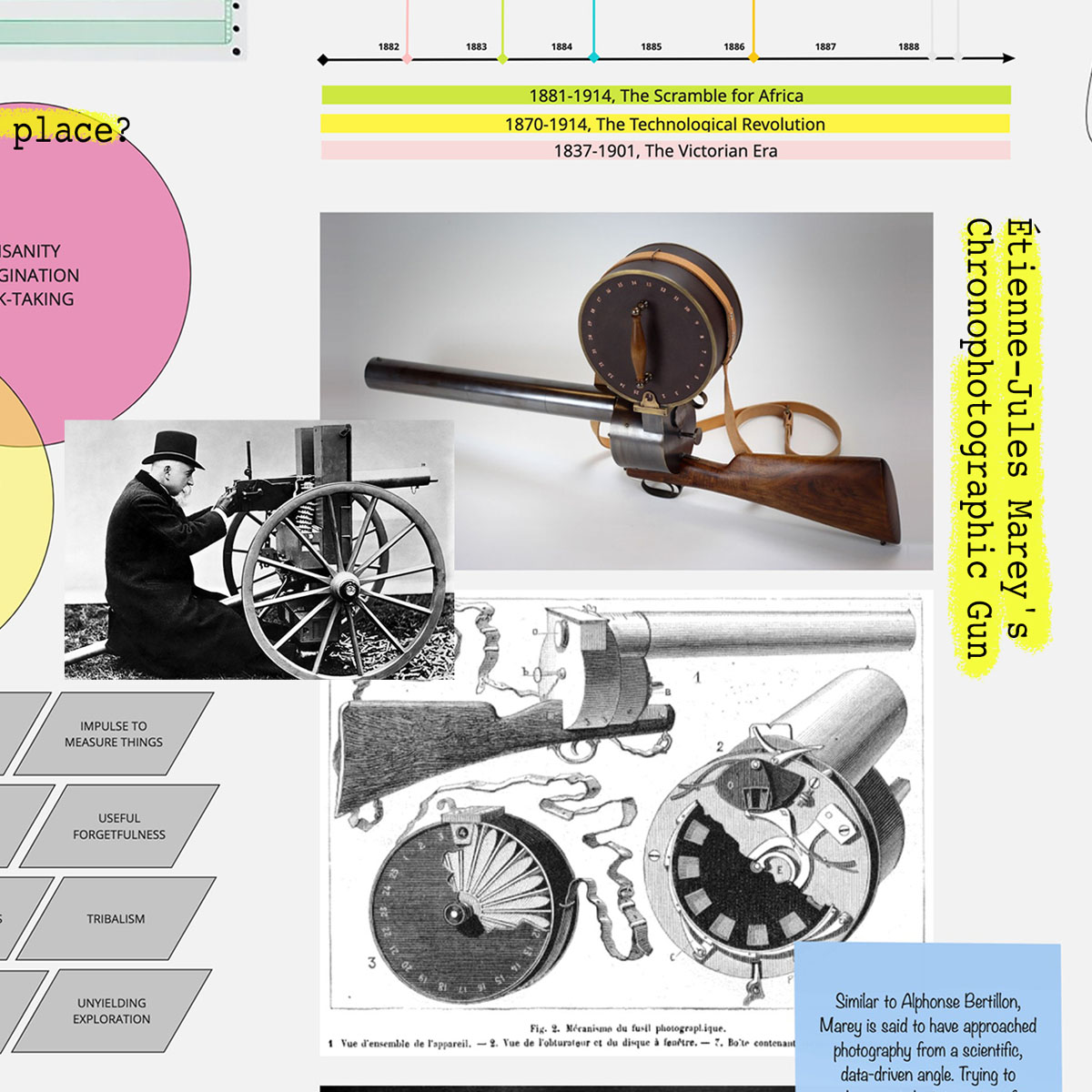
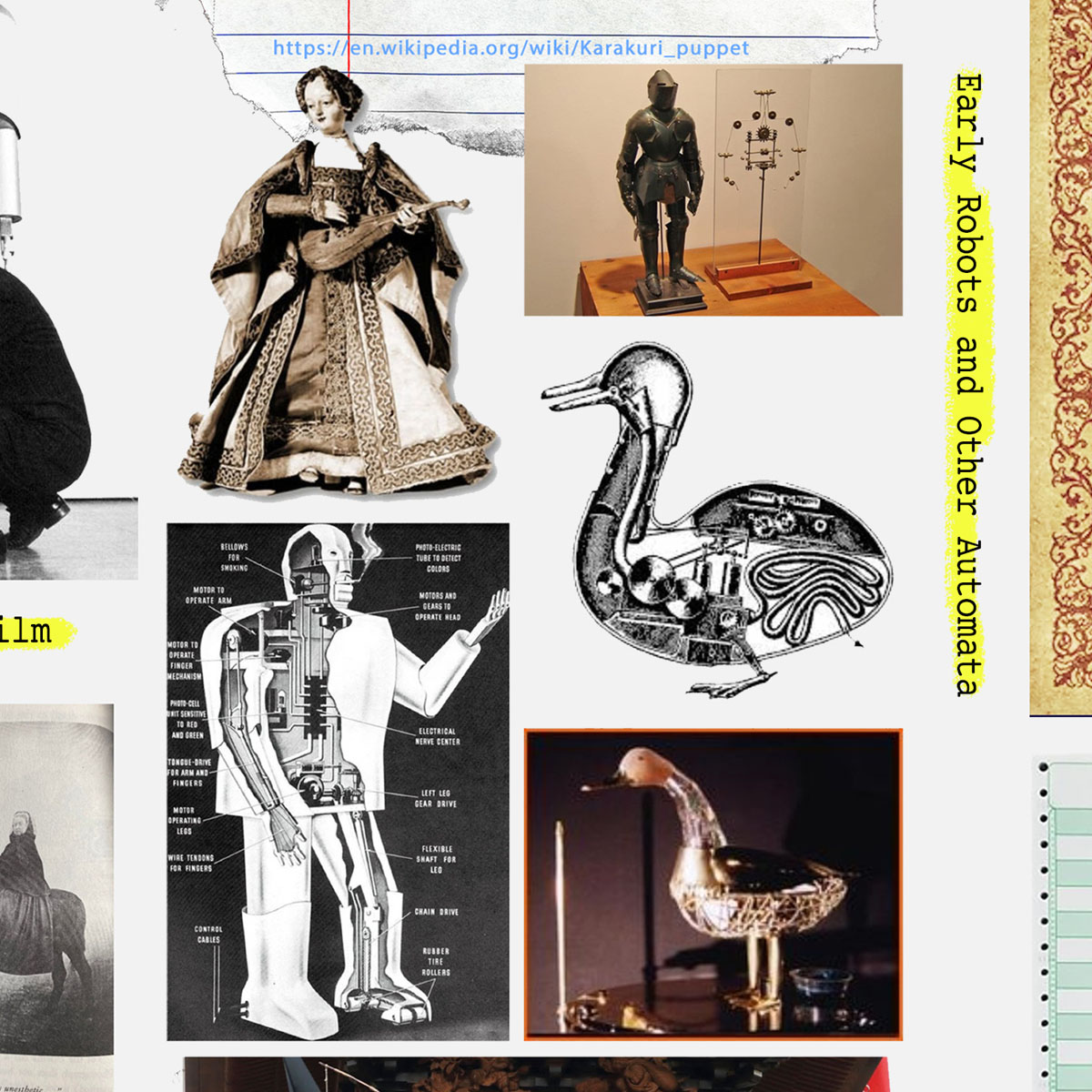
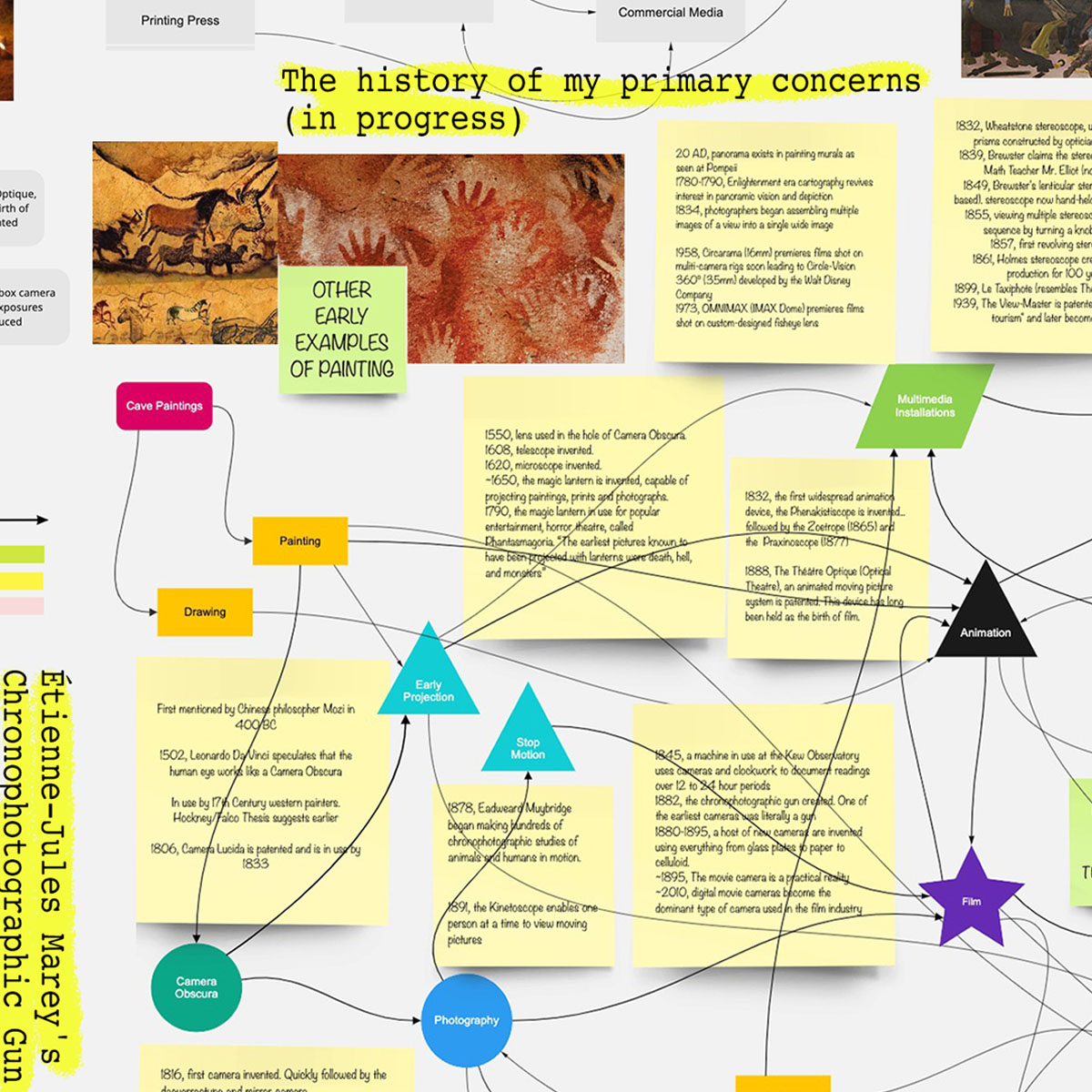
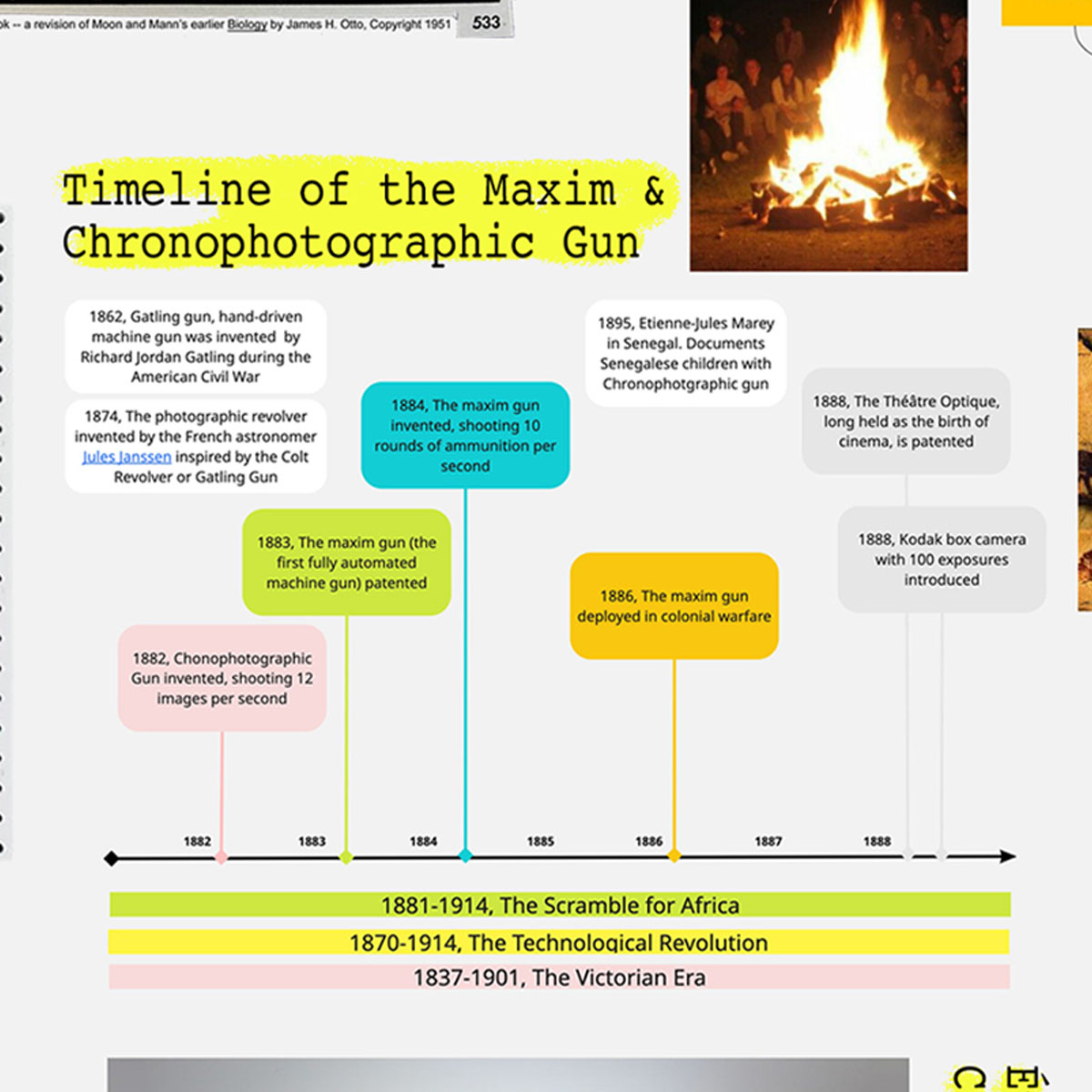
I began this research project in the fall of 2022, after spending nearly five years developing a body of paintings that incorporated projected light. By placing the technology of the projector alongside the technology of painting as equal artistic materials, I found myself in a series of conversations with other artists that deepened my curiousity about the expansive space between mediums and about the histories that emerge within it.
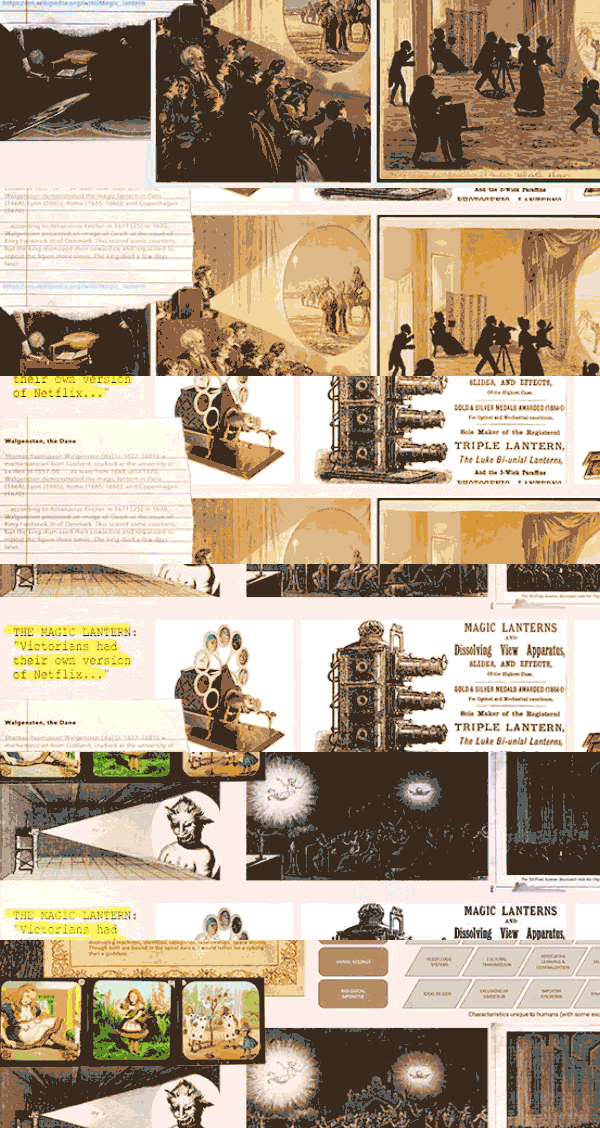
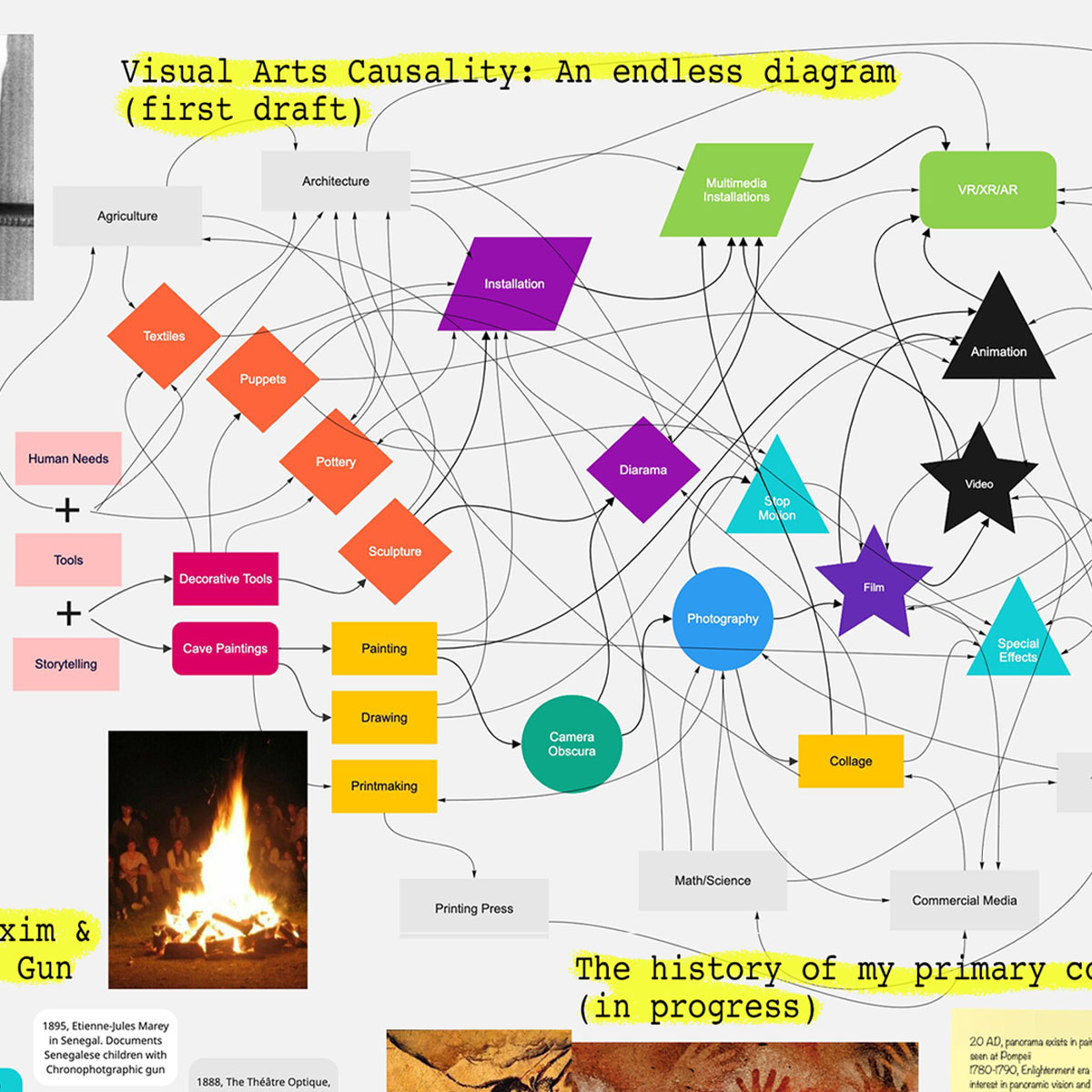
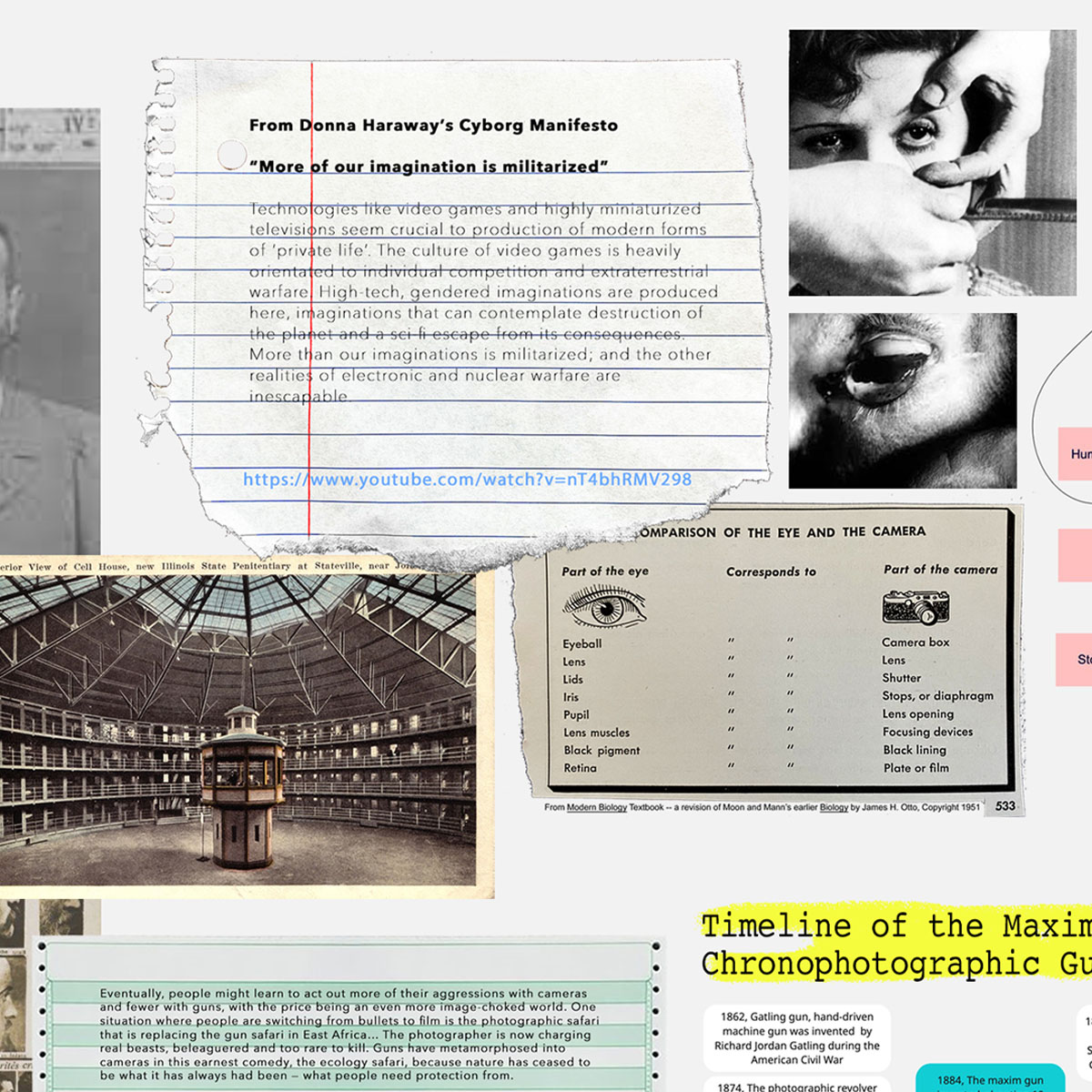
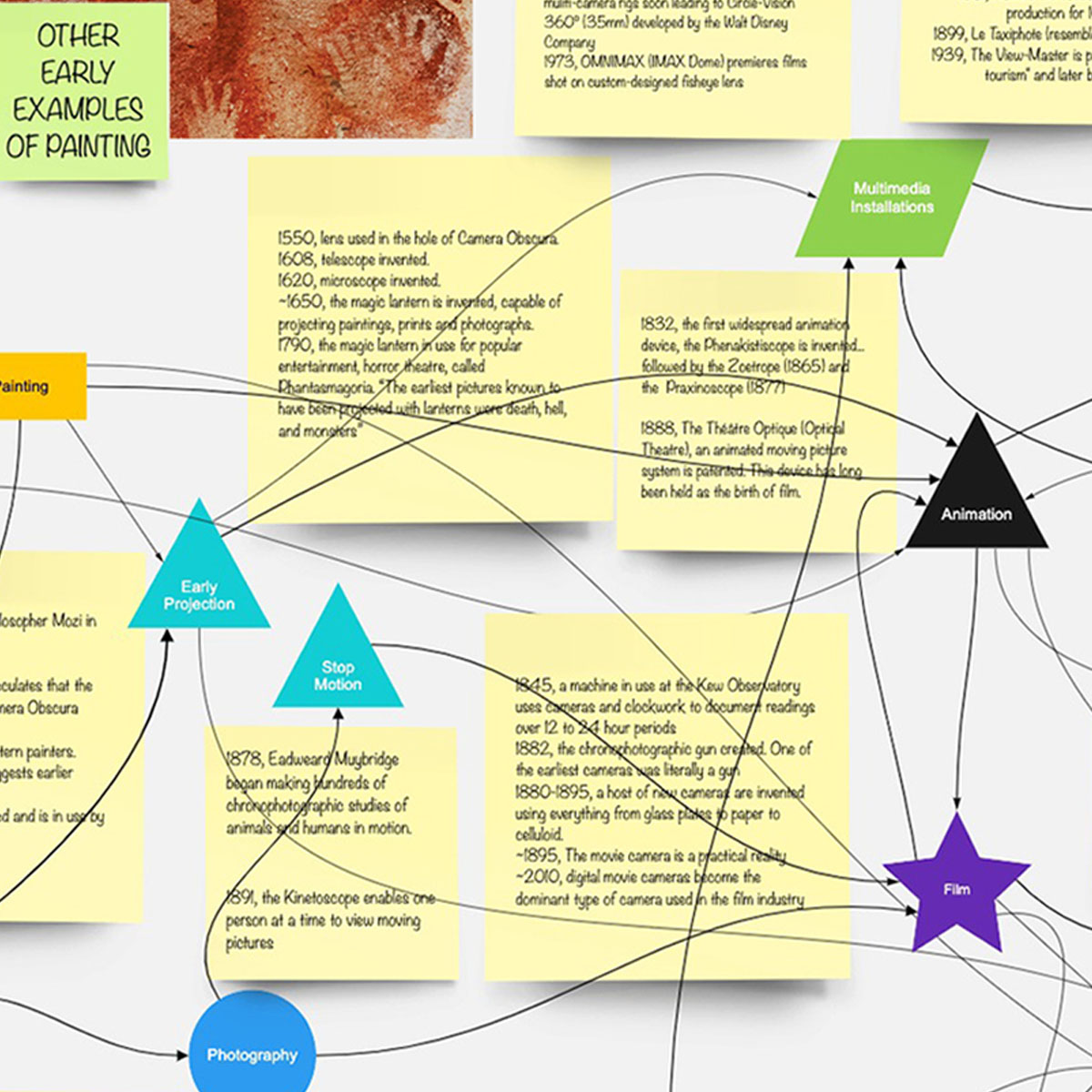
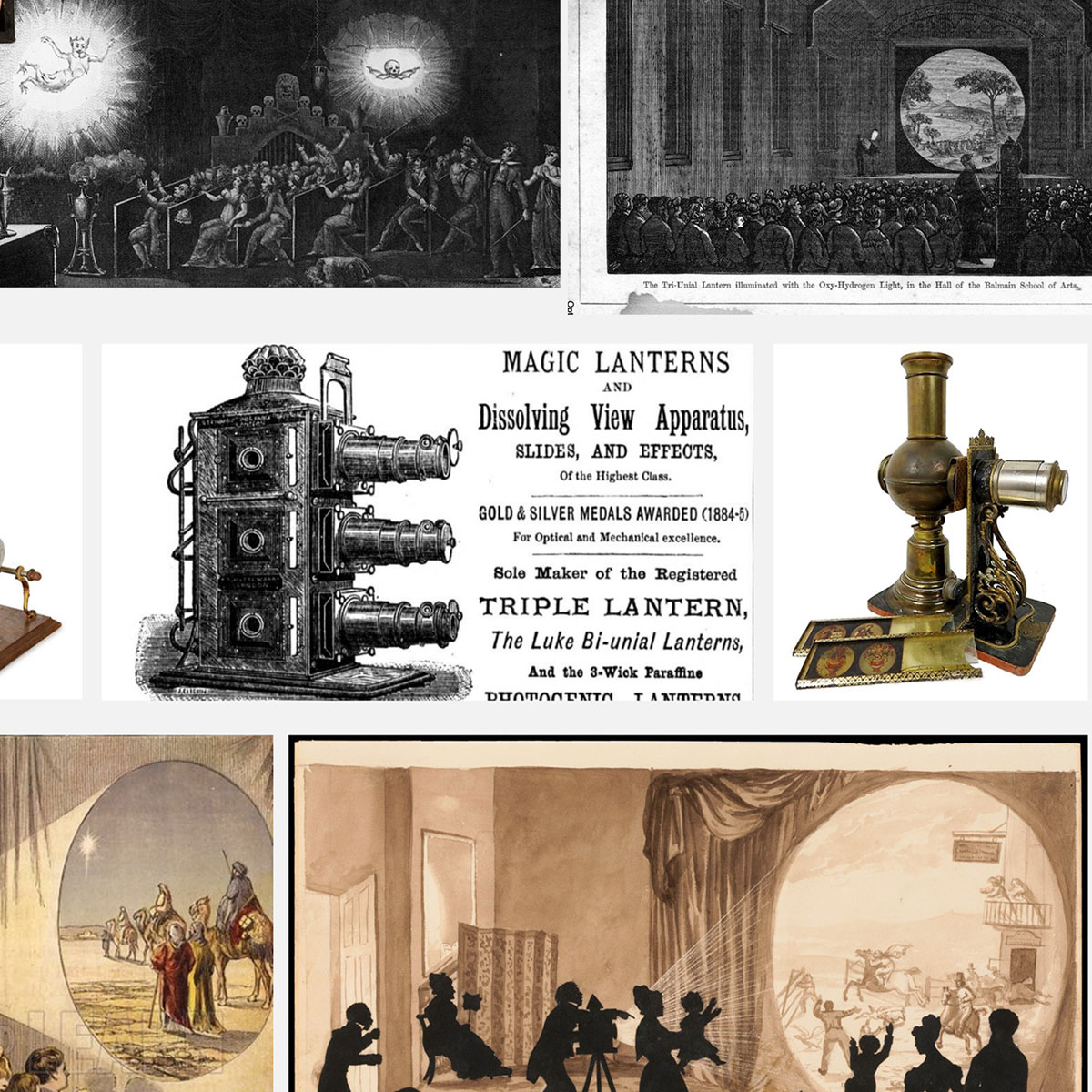
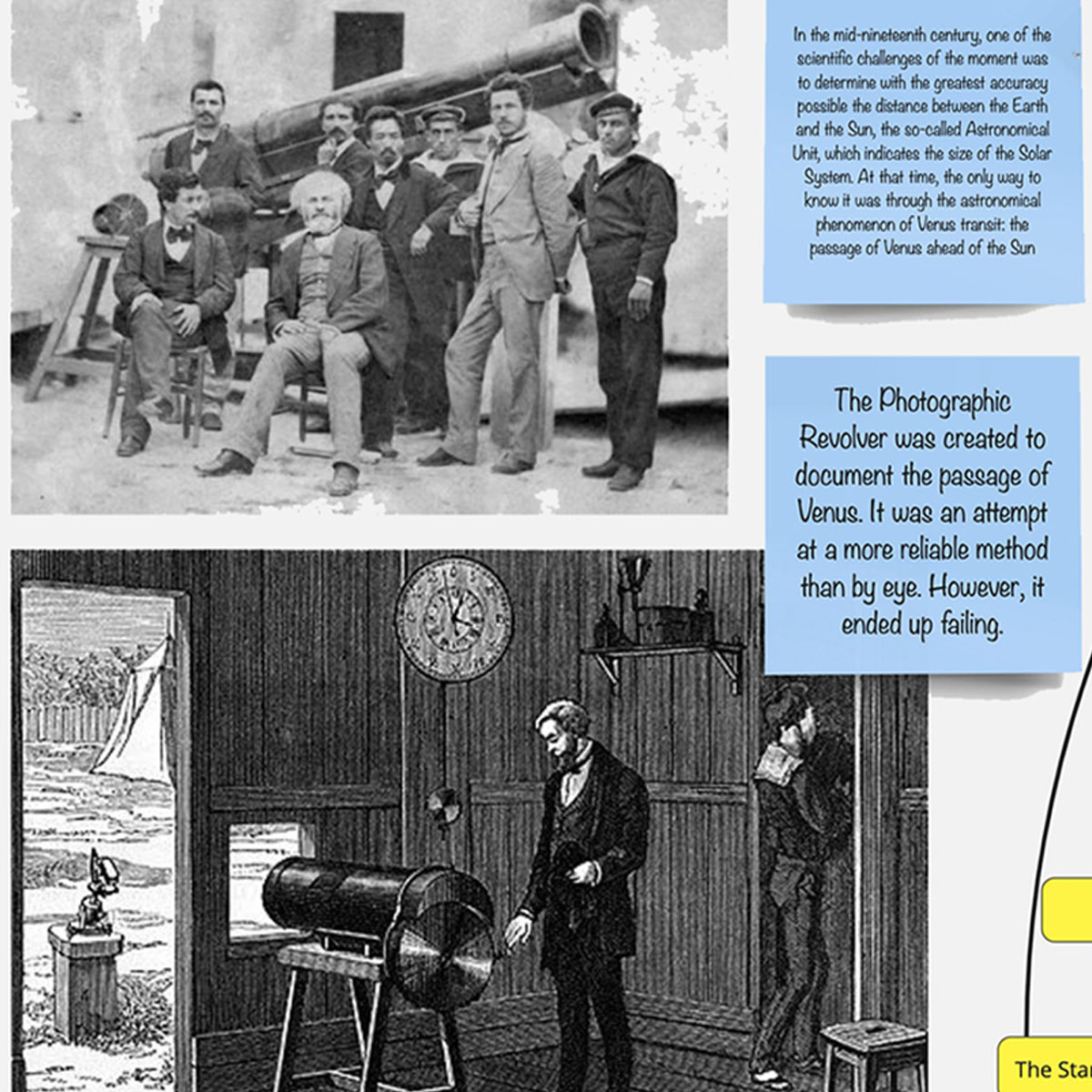
I began a Miro board around what I called “visual arts causality”— moments when different mediums, technologies, and cultural practices influenced, overlapped with, or gave rise to one another. From there, I began teaching myself the histories of these in-between moments: from the shared technological lineage of chronophotographic guns and early machine guns, to astronomy’s influence on photography, to the strange and theatrical history of the magic lantern.
At its core, the research asks what our technologies reveal about us. These are, after all, tools born from the same human impulse toward invention, creation, destruction, and transformation. The research expands into cyborgs, robots, and other technological extensions of the body as speculative continuations of our own evolution. The resulting project is, in some sense, a queering of art and technological history: painting, textiles, computers, cameras, weapons, and projectors become less distinct categories than different extensions of what we are.
MAYBE MILLIONS
Groggy from a long night of good sleep
And we sing in each other’s ears
And we brush each other’s teeth
And we get ready for the day ahead
One little morning in one small day
In a year among many other years
Where we’re committed to taking
Care of each other, you and me
And everyone else
And if you’re awake, you probably know
That what I just described is a dream
That’s all
Something somewhere
So far away from you and I
And knowing you can never return
To the dream
A sadness wells up inside
Continue Reading →
IMAGINED ROSE GARDENS
Your sun kissed face
We’re dreaming of a world
Full of roses and gardens
If we knew we could bend reality
Through its own concrete maze
Swap blocks for bushes
I’d wrecking ball parking garage
And return South Austin
To the green belt wild
Critters look at me
From encyclopedia pages
And shake their rattled tails
It’s not a rose garden yet
The raccoon brigade sneaks
By my window at night
To tell me
All i’ve done
just destroyed
The foundation
Whatever was here
And the good good trash cans
Continue Reading →
ECHOES IN MY OPERAHOUSE
Far away from a place I might call home
A backpacker limping into town
Someone on their last can of beans
Impressed by infinite aisles
As they wander the maze-like corridors
Of the local Price Chopper
And I'm stuffing my bags after check out
Without a thought for how they may weigh me down
I feel like one of the empty buildings that litter this town
Standing tall but oddly vacant
Vacated for how long now?
And I think how people could fill me up
And life and commerce could occupy
The space that is me
And the more you look in my windows
The more you might know that something happened
That there is no one home today—
Not right now, not for now
And I’m that church tower too
The one with the star
Sometimes beckoning you
Continue Reading →
MY SOFTNESS
Myself, my softness
Like grass lifted in the wind
To find its direction
How I wished for control
But nothing grabbed hold
I trembled sneered scared because
They never even noticed
Things I did or didn’t do
Wouldn’t of done or couldn’t of done
And those I loved and desperate and done
Just running from the truth
Cage wheel spinning in
Those crispy summer days
And bright feeder road highways
And wisps of clouds forgotten
Continue Reading →
Sometimes words simply arrive. An idea, or a series of ideas and images, floods into my mind and asks to be written down. Sometimes the writing is therapeutic—a way of giving shape to a fleeting feeling before it disappears. I have written countless fragments that remained unfinished for this reason. When I have the time and energy, I like to return to the poems that continue to call to me, giving them the attention they need to find their own sense of closure.
I began writing poetry when I returned to writing music during the pandemic, and soon it became a practice unto itself. Over the years, poetry has worked its way into nearly every facet of my multidisciplinary practice. It emerges in my music, performance work, and visual art; it has shaped the titles of my songs and paintings, and found its way into my drawings, where simple, semi-poetic phrases are frantically traced across the page, immortalized in their uncertainty and impossibility.
Sometimes I feel that a poem is the quickest way to truly say something: to transmit a profound thought or feeling that might otherwise remain beyond the reach of ordinary language. It has become natural for me to follow that impulse, to say “yes” to the creativity that moves outward from within me. Poetry gives a place for the noise in my head to emerge—to leave me, enter the world, and become something new that perhaps can be understood by and shared with you.